
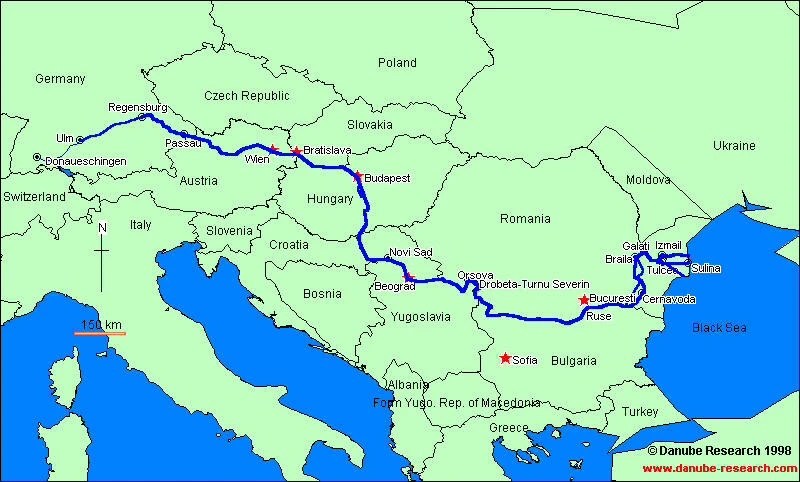
The Danube River basin has been home to some of the earliest human civilizations, with settlements dating back to the Neolithic era, including the Linear Pottery and Vinča cultures; later, the river became a vital trade route for the ancient Greeks and Romans, leading to the development of major cities like Vienna, Budapest (Aquincum), Belgrade (Singidunum), and Ruse (Sexantaprista) around Roman military outposts along its banks; after the fall of the Roman Empire, the Danube continued to be a strategic boundary, with castles and fortresses built by various powers including Charlemagne and the Ottoman Turks, further shaping the settlements along its course.
Key points about Danube River settlements:
- Early Civilizations: The Danube basin was home to some of the earliest known European cultures, including the Linear Pottery and Vinča cultures, known for their advanced pottery and agricultural practices.
Roman Influence:
The Roman Empire heavily utilized the Danube as a trade route and border, establishing military settlements that grew into major cities like Vienna (Vindobona), Budapest (Aquincum), and Belgrade (Singidunum).
Medieval Period:
Following the fall of the Roman Empire, various kingdoms, including the Holy Roman Empire, built castles and fortresses along the Danube to defend their territories.
Ottoman Control:
For centuries, the Ottoman Empire controlled a large portion of the Danube, marking the northern boundary of their empire.
Modern Era:
Today, the Danube River flows through several European countries and remains a significant transportation route, with many cities along its banks maintaining historical architecture and cultural heritage tied to their past settlements.
The Varna Culture

The Varna culture was a Chalcolithic civilization that emerged in northeastern Bulgaria around 4,600 BCE. The culture was advanced for its time, and is known for being the birthplace of goldsmithing and for its rich necropolis:
- Goldsmithing The Varna culture is credited with the world’s oldest gold objects, which were discovered in a necropolis near the modern-day city of Varna. The gold artifacts include diadems, sceptres, rings, bracelets, and pectorals. The gold is on display at the Varna Archaeological Museum.
- Necropolis The Varna I necropolis contains the graves of a highly structured society. The richest graves include gold objects, copper tools, and decorated ceramics.
- Other artifacts The Varna culture also produced bone and stone idols, and copper tools.
- Trade The Varna culture traded with the South, as evidenced by the large amount of shell jewelry found in the graves.
The Varna culture is closely related to the Gumelnița culture. The region around Varna has many prehistoric settlements, with the earliest artifacts dating back 100,000 years.

 Reality is Dharma